However, global spaces still face major challenges:

Global spaces are needed to create and deliver on progressive commitments and standards for gender equality worldwide.

Today, the world is witnessing a coordinated rise of fascist and far-right forces. Democracy, civil society, and the lives of the most vulnerable are under direct threat. Hard-won fundamental rights — especially those of girls, women, and gender-diverse people — are being rolled back. Their futures are at stake. And at the same time, the very systems and structures that once upheld our sector are crumbling.

Global spaces played a key role in advancing the progress feminist movements made, progress that is now under threat. They provided a platform to amplify demands, shape global standards, and push governments toward accountability.

Despite these deeply rooted issues, Global Spaces can and should be transformed to strengthen their role as key spaces and moments for driving change. Women Deliver aims to use global spaces to create a collective vision that unites movements and prioritizes the leadership of the Global Majority, reflecting the demands and priorities of the feminist, women’s rights, and social justice movements we are part of and work with. As one of the few global spaces that is led by civil society, Women Deliver Conferences offer a unique opportunity to co-create and further this vision. Because another world is possible, and we are building it side by side with them.

Through these spaces, we are also advancing a Feminist Playbook — a bold, collective declaration that defines our shared vision and sets the course to achieve it. This Playbook is being shaped through global consultations, plenaries, workshops, and strategy sessions, in collaboration with new partners, advocates, young leaders, and organizations dedicated to feminist values and gender justice.

It is only by bringing together a diversity of actors in the gender equality community — from feminists to youth activists, advocates with first-hand knowledge and lived experience of girls and women’s needs, political leaders and other decision-makers, donors, and more — that we can safeguard and advance meaningful and effective goals and standards for gender equality globally.

In all our priority global spaces, Women Deliver aims to ensure that the norms, standards, and political outcome documents about issues like global health, the climate crisis, and human rights incorporate a gender and age lens and advance progressive global narratives on these issues, including on adolescent girls’ rights; that we work with partners and allies to defend global spaces from anti-rights actors and reaffirm human rights standards; and that traditionally ignored voices, especially adolescents, youth, and advocates from the Global Majority, are centered. We also aim to influence partners to make global spaces more accessible, representative, and transparent.

Women Deliver is offering to use our role as a global convener to develop joint strategies within global spaces, reimagine what is possible, and craft a transformative vision for the world we want — one that rejects oppression and discrimination and instead prioritizes solidarity, hope, care, and joy.
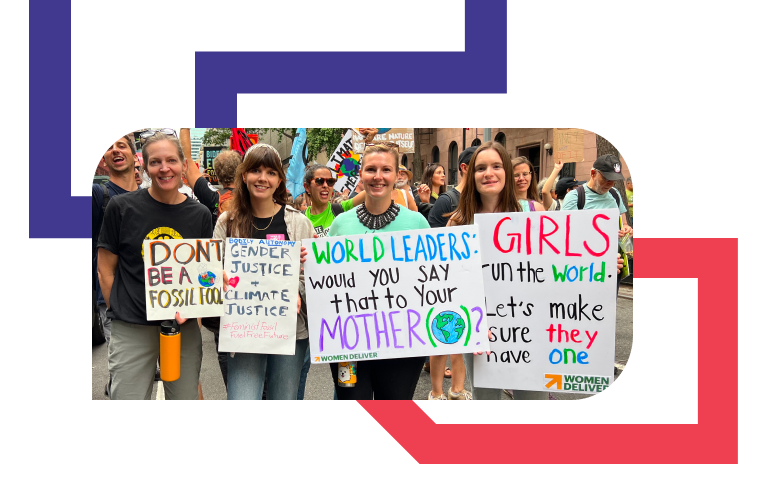
Key Global Spaces

  • The Commission on the Status of Women (CSW)

    CSW is the principal global body exclusively dedicated to the promotion of gender equality. During its annual two-week session, representatives of UN Member States, civil society organizations, and UN entities gather at UN headquarters in New York to discuss progress and commit to action.

  • The Commission on Population and Development (CPD)

    CPD plays the primary role in ensuring that the decisions and agreements from the landmark 1994 International Conference on Population and Development (ICPD) are met. In many ways, ICPD set the agenda for sustainable development – one that should recognize human rights, reproductive rights, and the needs and aspirations of women and girls. CPD meets once a year to assess the implementation of ICPD goals at the national, regional, and global levels.

  • World Health Assembly (WHA)

    The WHA is the decision-making body of the World Health Organization (WHO). Delegations from all WHO Member States attend the annual meeting and focus on a specific health agenda, as well as set WHO policies.

  • United Nations General Assembly (UNGA)

    UNGA is the main policymaker and key decision-maker for the United Nations. Comprising all Member States, it provides a forum for multilateral discussion of a wide range of international issues, including gender equality, human rights, and climate. UNGA meets in regular sessions from September to December each year, and discussions at these annual meetings lead to the adoption of resolutions.

  • Conference of the Parties (COP)

    COP is an international climate meeting held each year by the United Nations (UN). COP is short for “Conference of the Parties,” meaning those countries that joined an international treaty called the UN Framework Convention on Climate Change. These countries have committed to take voluntary actions to prevent “dangerous” human-induced climate change. Countries also take turns hosting an annual meeting at which government representatives report on progress, set intermediate goals, and negotiate policies related to the intersection of climate and issues like gender and human rights.

  • Women Deliver Conferences

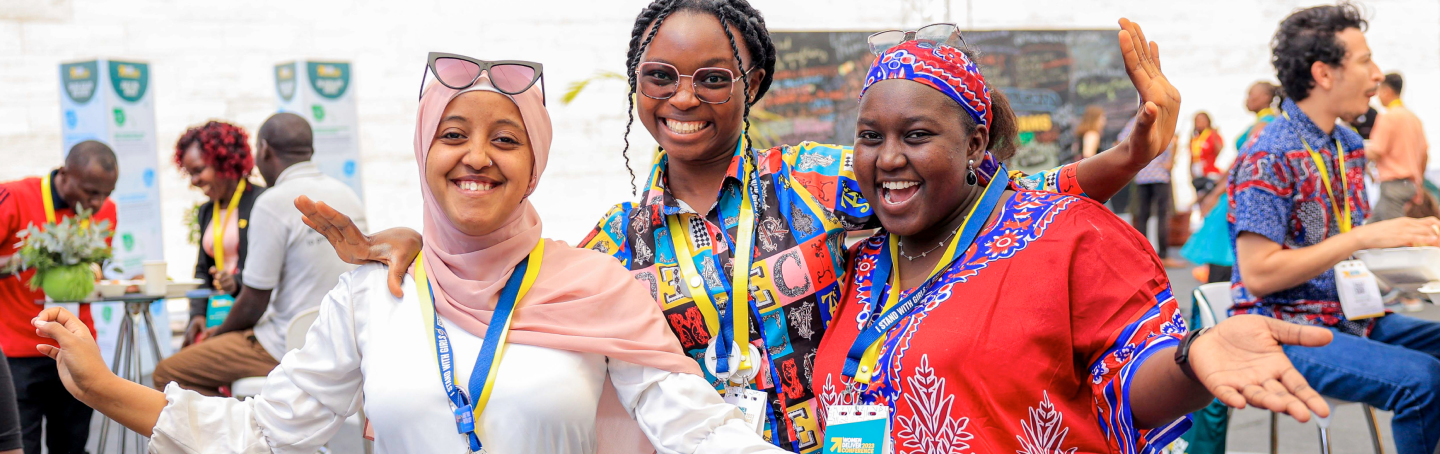
    The Women Deliver Conference, held every three years since 2007, bring together feminist movements, global decision-makers, advocates, media, and other gender-equality champions. Women Deliver Conferences have become global spaces where gender narratives and norms are discussed and created, the gender equality movement can be strengthened, and solidarity and momentum are built.

Our definition of
 ignored and
 marginalized voices:

Those with first-hand experiences or who are closest to the challenges faced by girls and women worldwide — including young people, feminist advocates, and coalition leaders from the global majority — possess critically important expertise and lived experiences that should be central in global discussions. However, colonial power structures, along with those who hold power within these structures, have intentionally ignored and marginalized their voices and contributions.

“Women Deliver’s aim is for those who have been excluded from global spaces to become the architects of international norms and standards.”

Our ultimate goal is to shift power in global spaces. We harness our almost two decades of experience in building bridges between global decision-makers and gender equality advocates, so that traditionally ignored and marginalized voices have a direct influence on global goals and agendas that can change the course of an adolescent girl’s life. This must include giving our access to global spaces to historically ignored experts and voices, as well as stepping back our presence and lowering our voice to make room for others.

To protect and advance girls and women’s SRHR and bodily autonomy, there is an urgent need to overturn long-standing colonial power and defend global spaces from anti-rights actors. As internationally recognized leaders in convening, we are rethinking and redesigning global spaces by centering the participation of young and Emerging Leaders, and other ignored voices, particularly from systemically underrepresented communities.

In everything we do, we focus on working together with our allies, with those who have been traditionally ignored at the helm, to create a progressive agenda for change that safeguards past gains and advances visionary change on gender equality and SRHR.

1’Global majority’ refers to most of the population of the world who live in what is often referred to as ‘developing countries’ or ‘the Global South’ (see right). ‘Global minority’ refers to the smaller population of the world who live in wealthier nations, often described as ‘the West’ or ‘the Global North’. See Oxfam’s Inclusive Language Guide for additional information.

Global spaces matter more than ever.

Gender equality cannot be advanced in isolation: it intersects with security, health, environmental, and human rights issues worldwide. Solutions must be global, and international standards are essential to strengthen progress at both national and global levels.

How We Work

We advance the health and rights of adolescent girls by creating spaces for collective action, championing and supporting youth advocacy, and convening likeminded organizations. In everything we do, we aim to shift power into the hands of those closest to and living the challenges that girls face.